
As manufacturing industries—from automotive to aerospace—demand tighter tolerances, faster production cycles, and greater adaptability, high-performance IO forming machines have become essential tools for precision component fabrication. Not all IO forming equipment delivers the same level of efficiency or reliability, though; selecting the right model requires focusing on core features that directly impact output quality, operational flexibility, and long-term cost-effectiveness. Below are the five non-negotiable features to prioritize when evaluating high-performance IO forming machines.
1. Real-Time Servo-Driven Control Systems
At the heart of any high-performance IO forming machine is a robust servo-driven control system, paired with high-resolution encoders. This feature eliminates the “lag” common in older, hydraulically dominated systems, adjusting forming pressure, speed, and tool positioning in milliseconds. Unlike basic models that operate on fixed settings, servo-driven controls maintain consistent precision even when processing variable materials—from lightweight aluminum alloys to high-strength composites. Look for systems that offer positioning accuracy of ±0.02mm or better; this level of precision ensures dimensional consistency across batches, reducing waste from misformed parts and minimizing the need for post-production adjustments.
2. Adaptive Temperature Regulation for Multi-Material Processing
Modern manufacturing often requires switching between materials with distinct thermal properties—such as magnesium alloys (sensitive to overheating) and rigid plastics (needing uniform heat distribution). High-performance IO forming machines address this with adaptive temperature regulation modules, which use PID (Proportional-Integral-Derivative) technology to monitor and adjust die temperatures in real time. Unlike one-size-fits-all heating systems, these modules can create zone-specific heat profiles: for example, applying higher heat to a die’s edge for complex bends while keeping the center cool to prevent material warping. This feature is critical for avoiding defects like surface cracks or uneven thickness, especially when working with advanced materials used in EV components or aerospace parts.
3. Integrated In-Line Quality Inspection Tools
Stopping production to inspect parts manually slows workflows and increases the risk of defective components reaching downstream stages. Top-tier IO forming machines solve this with integrated in-line quality inspection—typically using 3D vision cameras or laser scanners that assess every part immediately after forming. These tools measure key dimensions and surface quality, flagging anomalies in seconds. Some advanced systems even sync with production software to automatically adjust machine settings if consistent defects are detected—for example, tweaking pressure if parts are consistently undersized. This not only boosts pass rates but also reduces labor costs associated with manual inspection.
4. Quick-Change Tooling and Modular Station Design
Manufacturers increasingly need to switch between part designs—whether for small-batch custom orders or seasonal product updates—and downtime during tool changes eats into productivity. High-performance IO forming machines feature quick-change tooling systems that reduce die swap times from 45+ minutes (common in older models) to 15 minutes or less. These systems use standardized, clamp-on tooling and intuitive alignment guides, so operators don’t need specialized training to switch between dies. Complementing this is a modular station design: machines with interchangeable forming stations (e.g., for flaring, threading, or stamping) can be reconfigured for different part types without extensive overhauls. This flexibility is a game-changer for facilities balancing high-volume production with diverse product lines.
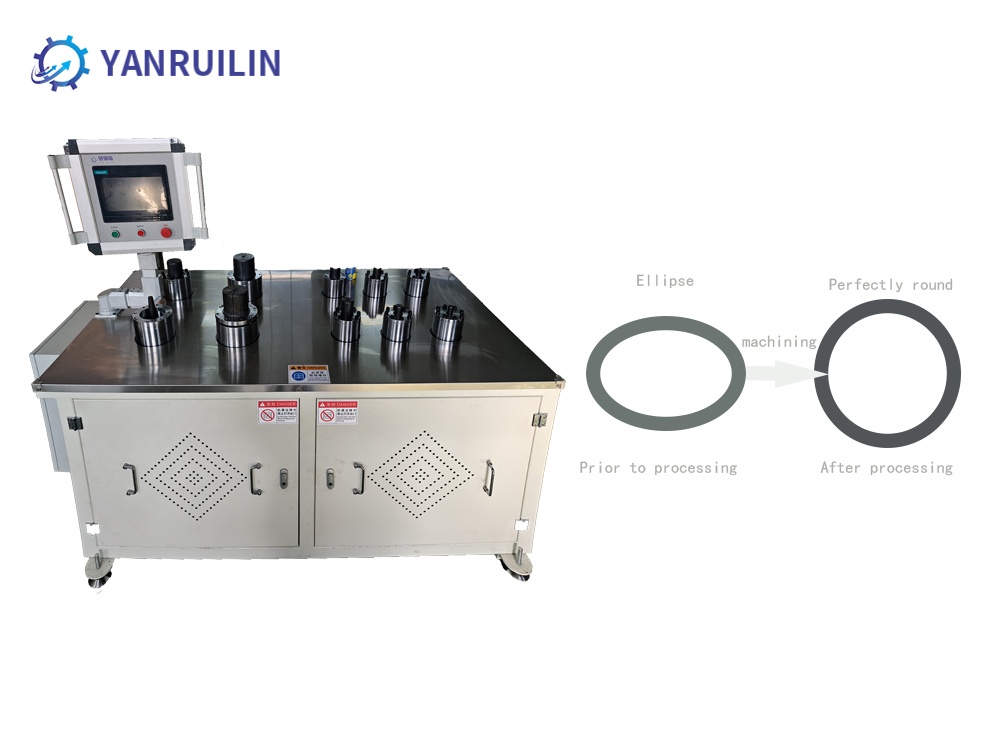
5. Energy-Efficient Operation and Durable Construction
Long-term operational costs matter as much as upfront performance, so high-performance IO forming machines prioritize energy efficiency and durability. Energy-saving features include variable-frequency drives (VFDs) that adjust motor speed based on workload (cutting electricity use by 20–30% compared to constant-speed motors) and waste heat recovery systems that redirect excess die heat to preheat incoming materials. Durability, meanwhile, comes from heavy-duty components: hardened steel dies that resist wear from abrasive materials, sealed bearing systems to prevent dust or coolant damage, and corrosion-resistant frames for use in harsh manufacturing environments. Machines built with these features require less maintenance (extending mean time between failures, or MTBF) and have longer service lives—often 10+ years—delivering a stronger return on investment.
Why These Features Matter for Modern Manufacturing
In industries where precision and speed directly impact competitiveness, these five features aren’t just “nice-to-haves”—they’re essential for keeping up with demand. A machine with servo control and adaptive heating can handle the complex materials needed for next-gen products; in-line inspection reduces waste; quick-change tooling enables agility; and energy efficiency cuts long-term costs. For manufacturers evaluating IO forming machines, focusing on these attributes ensures the equipment can grow with evolving production needs—whether that means scaling up for high-volume EV part production or adapting to new material technologies. Ultimately, the right high-performance IO forming machine isn’t just a tool—it’s a catalyst for more reliable, efficient, and flexible manufacturing.
Bu web sitesi, web sitemizde en iyi deneyimi yaşamanızı sağlamak için çerezleri kullanır.

 English
 Español
 Pусский
 Deutsch
 日本語
日本語 한국어
한국어 Italiano
 हिन्दी
 Indonesia


Yorum
(0)